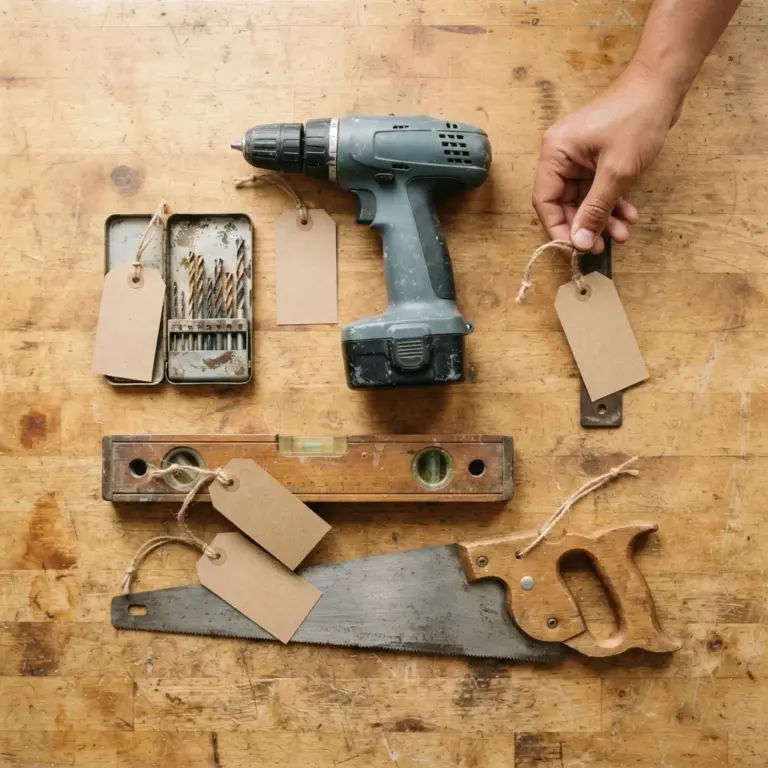
Ten Household Fixes That Cost Nothing But Ten Minutes
Quick, free fixes for everyday annoyances like squeaky hinges, loose cabinet handles, and drafty doors.
6 min readBy Dave Kowalski

Table of Contents
Every home has a handful of little annoyances that you step over, tune out, or curse under your breath every single day. The squeaky hinge. The wobbly drawer pull. The door that lets in a cold draft every winter. None of these are big enough to call anyone about, and most of them don’t cost a dime to fix — they just need ten minutes and stuff you probably already have in a junk drawer somewhere. Here are ten fixes worth doing this weekend, roughly grouped by the four biggest offenders in most houses.
Squeaky Door Hinges
That creak isn’t a sign your door is dying — it’s just dry metal rubbing against dry metal. Fixing it is almost embarrassingly easy.
1. Lubricate the pins
Open the door, lift the hinge pin out (a butter knife or the flat end of a screwdriver works if it’s stuck), and wipe it down. Rub a little cooking oil, petroleum jelly, or even a bar of soap along the pin, then slide it back in and work the door back and forth a few times to spread the lubricant through the hinge. If you’ve got actual household oil — the kind you’d use on a bike chain or sewing machine — that works even better and lasts longer than cooking oil, which can turn sticky over time.
2. Use what’s already in your kitchen
No oil on hand? A dab of petroleum jelly on a cotton swab, rubbed directly into the hinge barrel without removing the pin, will quiet most squeaks for months. Even the graphite dust from rubbing a pencil along the pin can work in a pinch — graphite is a classic dry lubricant and won’t attract dust the way oil sometimes does.
3. Tighten loose screws first
Sometimes the squeak isn’t the pin at all — it’s a hinge plate that’s worked loose and is flexing slightly every time the door moves. Give each screw a quarter turn with a screwdriver before you reach for the oil. If a screw hole has gotten too worn to bite, jam a couple of toothpicks or a wooden matchstick coated in wood glue into the hole, snap off the excess, let it dry for a few minutes, and rescrew. The wood fills the gap and gives the screw something to grip again.
Loose Cabinet and Drawer Handles
Wobbly hardware is one of those things that makes a whole kitchen feel run-down, even if everything else is fine. The fix is almost always the same: the screw has stripped out its hole in the wood, or it just needs a firm tightening.
4. Tighten from the inside
Open the cabinet or drawer and look at the back of the handle or knob — there’s a screw (or two) holding it to the door or drawer face from behind. Grab a screwdriver that actually fits the head (a mismatched size is the number one reason people think a screw is “stripped” when it’s really just being turned wrong), and snug it up. Don’t overtighten to the point of cracking the wood or laminate; snug and stable is the goal.
5. Fix a stripped screw hole
If the screw just spins without tightening, the hole itself has worn out. The toothpick-and-glue trick from the hinge section works here too: break off a few wooden toothpicks, dip them in wood glue, push them into the hole, trim flush, and let it set for a few minutes before reinserting the screw. In a real pinch, a bit of steel wool or even a folded piece of paper towel stuffed into the hole first can give a screw enough to grip temporarily.
6. Swap or flip mismatched hardware
If a handle has been loose so long it’s chewed up the hole beyond a quick fix, check whether you have a matching spare in a junk drawer, or whether flipping the handle to use the opposite screw holes (some have two spacing options) solves it without any repair at all. This is also a good moment to check a local tool library or repair café if you want a proper drill and slightly bigger screw to solve it permanently — but for a ten-minute fix, the toothpick trick will hold for a long time.
Drafty Door Gaps
A gap under a door doesn’t just let in cold air in the winter — it lets in noise, dust, and in some homes, bugs. You don’t need a contractor to deal with this.
7. Roll up a draft snake
The simplest fix in this entire list: take a bath towel, hand towel, or old sweatshirt, roll it up snugly, and lay it along the bottom of the door on the cold or noisy side. It’s not elegant, but it works instantly and costs nothing. If you want something a bit tidier, sew or safely pin the ends of an old sock or pant leg filled with rice or dry beans into a tube — a classic no-sew draft stopper that lasts for years.
8. Check the weatherstripping you already have
Many exterior and even some interior doors already have a strip of rubber or foam along the frame that’s simply come loose, compressed flat, or peeled up over time. Press it back into place, and if it’s just worn thin, a strip of clear packing tape folded over the edge can add just enough thickness to seal the gap until you can replace it properly. Weatherstripping rolls are cheap when you do need to replace them, but this buys you a draft-free week or two for free.
9. Use a rolled towel or foam pipe insulation on window and door frames
If the draft is coming from around the frame rather than under the door, a length of foam pipe insulation (the kind sold for wrapping water pipes) split open and pressed into the gap works surprisingly well as a temporary seal. Don’t have any? A few strips of cardboard wedged snugly into the worst gaps, then covered with tape so they don’t shift, will cut the draft noticeably until a permanent fix is possible.
Sticking Window Tracks
Windows that stick or grind usually aren’t broken — they’re just dirty or dry, and the fix is almost identical to the hinge fix above.
10. Clean, then lubricate the track
Vacuum out the window track first — dirt and grit are usually the real culprit, acting like sandpaper every time you try to slide the window. Once it’s clean, run a bar of soap, a candle stub, or a little furniture wax directly along the metal or vinyl track. Paraffin wax in particular glides beautifully and doesn’t attract as much dust as oil does, which matters for a horizontal surface like a window track. Slide the window up and down a few times to work it in, wipe away any excess, and you should feel an immediate difference.
If the window still sticks after cleaning and waxing, check whether painted-over tracks are the issue — old paint jobs sometimes seal a window shut along the edges. A utility knife run carefully along the seam where sash meets frame can free it up without any hardware repair at all.
Worth the Ten Minutes
None of these fixes require a trip to the store, a call to anyone, or any skill you don’t already have. They’re the kind of small, satisfying wins that make a rented apartment or an aging house feel a little more cared for, one squeak and wobble at a time. And if you run into a fix that needs an actual tool you don’t own — a real drill, a proper caulk gun, a hinge that needs replacing outright — that’s exactly what a local tool library or repair café is for. No need to buy something you’ll use once a year when a neighbor down the street already has one gathering dust in their garage.