Building a Household Resourcefulness Kit: What to Keep on Hand
The small stash of tools, fasteners, and supplies that lets you solve most snags without a store run.
5 min readBy Priya Desai
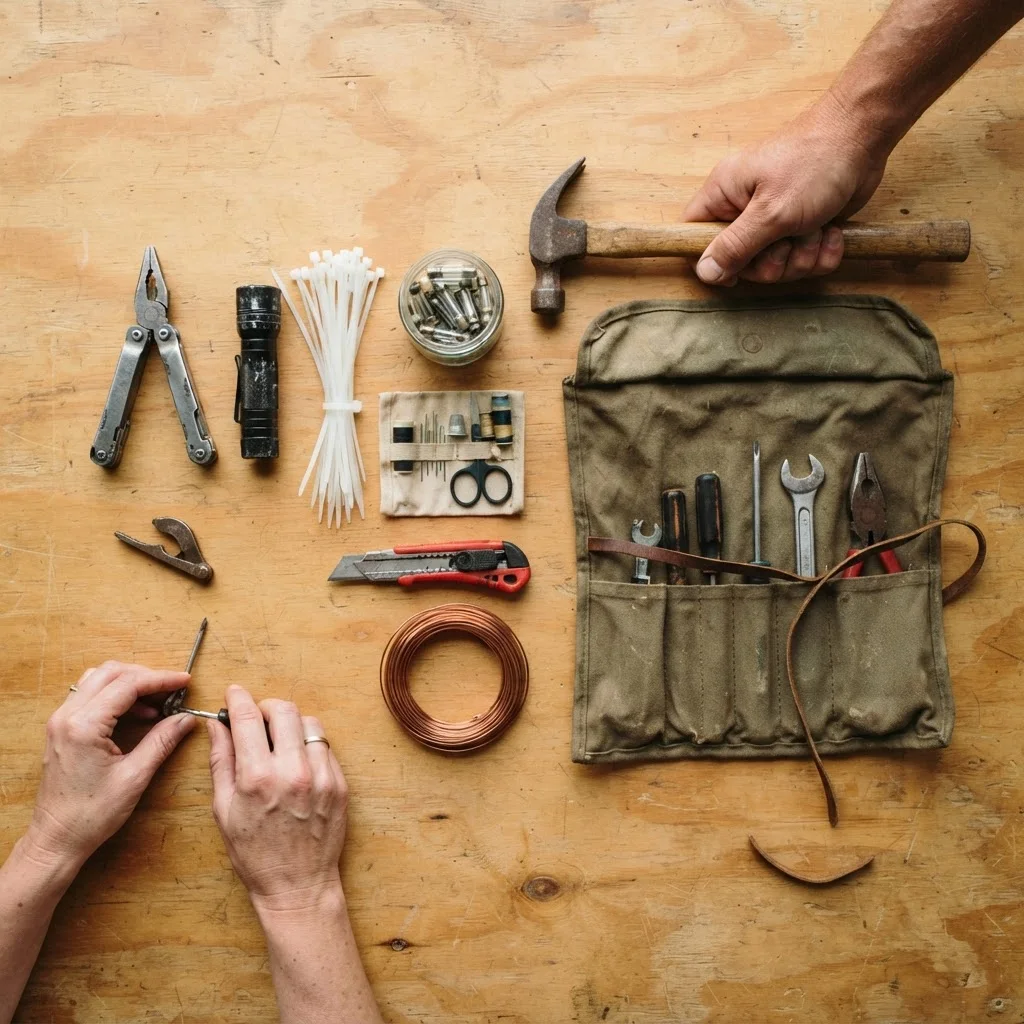
Table of Contents
There’s a particular kind of frustration that comes from being one washer, one zip tie, or one Phillips-head screwdriver away from finishing a job. You know the fix is simple. You just don’t have the thing. A well-stocked household kit solves this problem before it starts, and it doesn’t need to be expensive or exhaustive—just thoughtfully chosen. Here’s how to build one that actually earns its shelf space.
Core Hand Tools Worth Owning Outright
Some tools you’ll use so often that borrowing them from a tool library or a neighbor becomes more hassle than it’s worth. These are the ones worth buying once and keeping forever, since decent hand tools rarely wear out.
- A multi-bit screwdriver. One handle with swappable Phillips, flathead, and Torx bits covers the vast majority of household screws. Look for one with a ratcheting function if you can find it—your wrist will thank you.
- An adjustable wrench. A single 8- or 10-inch adjustable wrench handles plumbing nuts, furniture bolts, and the occasional stuck bike part.
- A claw hammer. For hanging shelves, pulling nails, and the odd bit of light demolition.
- A tape measure. Cheap, essential, and surprisingly easy to lose track of if you don’t give it a dedicated spot.
- Needle-nose pliers and regular pliers. Useful for gripping, bending, and reaching into tight spots a hand can’t manage.
- A utility knife with replaceable blades. For boxes, flooring, weatherstripping, and trimming just about anything.
- A small level. Hanging a picture straight the first time saves you three extra holes in the wall.
- An adjustable pipe wrench or channel-lock pliers. Handy for basic plumbing tasks like tightening a slip nut under a sink—just steer clear of anything involving gas lines or built-in appliance wiring, which is a job for a licensed pro.
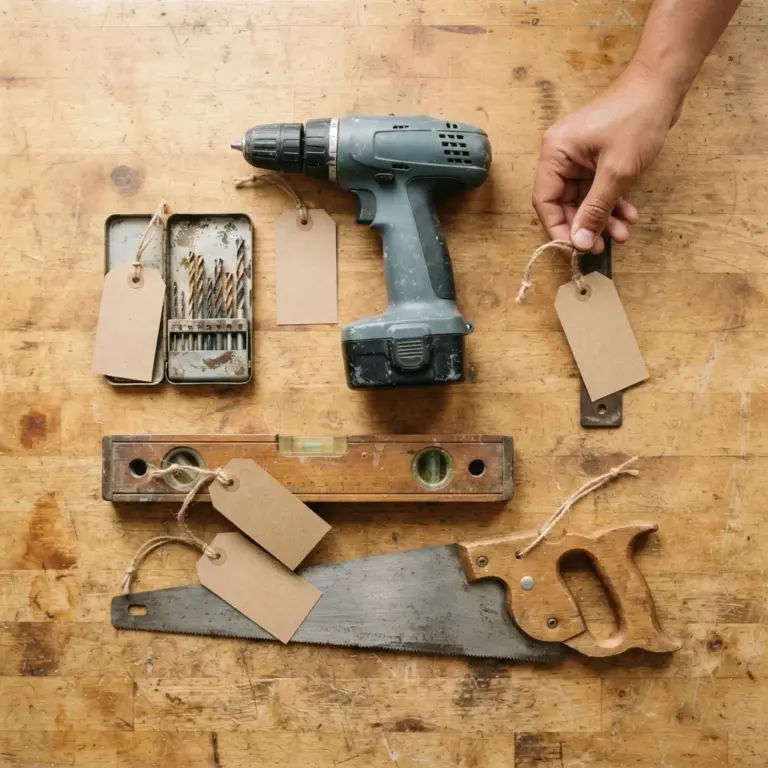
Notice what’s missing: power tools. Drills, saws, and sanders are exactly the kind of thing a tool library exists for. You’ll use a drill a few times a year at most, so unless you’re deep into DIY projects, borrowing beats owning for anything with a cord or a battery.
Fasteners and Adhesives to Stock
Half of household repair is just having the right small connector on hand. A little organizer bin with a mix of the following will resolve more problems than you’d expect.
- Assorted screws. A range of wood screws and drywall screws in a few common lengths. Buy a multi-pack rather than single-size boxes.
- Nails. A handful of finishing nails and a handful of common nails covers most light framing and trim work.
- Nuts, bolts, and washers. Furniture and appliances often shed these over the years. A small variety pack from the hardware store is cheap insurance.
- Picture hangers and wall anchors. Different wall types (drywall, plaster, brick) need different anchors, so keep a small assortment rather than just one kind.
- Zip ties in a few sizes. For cable management, quick fixes, and holding things together until a permanent repair happens.
- Rubber bands and binder clips. Not glamorous, but endlessly useful for sealing bags, bundling cords, and improvising a grip.
- Super glue and epoxy putty. Super glue for fast, small fixes; epoxy putty for gap-filling repairs on ceramics, plastics, and some metals.
- Wood glue. Stronger than you’d think for furniture joints and small wood repairs.
- Duct tape and clear packing tape. The old joke about duct tape fixing everything exists for a reason.
- Electrical tape. Useful for bundling cords or marking wires—just remember that anything involving actual household wiring repairs belongs to a licensed electrician, not a tape job.
- Thread-lock or plumber’s tape. Small rolls that prevent leaks and loosening in fittings and pipe joints.
You don’t need every fastener size ever made. Buy variety packs, use what you need, and let the kit slowly calibrate itself to the repairs your household actually runs into.
Reuse-Worthy Scraps to Save on Purpose
This is the part of resourcefulness that separates people who solve problems for free from people who make a store run every time something breaks. The trick is being selective—saving junk indiscriminately just creates clutter, but saving the right junk on purpose creates a resource.
- Glass jars with lids. Great for organizing fasteners, storing leftovers, or holding paint and stain for touch-ups later.
- Sturdy cardboard boxes. Useful for shipping items back, storing seasonal gear, or padding fragile things in storage.
- Extra fabric scraps. Old t-shirts and worn-out towels make excellent rags, patch material, or padding.
- Spare screws and hardware from assembled furniture. Flat-pack furniture almost always ships with a few extra fasteners. Keep them—they often match other pieces in your house.
- Paint and stain leftovers. Small labeled containers of leftover paint save you from repainting an entire wall over one scuff.
- Bubble wrap and packing paper. Reuse it for the next move, the next shipped gift, or protecting stored items.
- Wire, twine, and cord scraps. Handy for garden ties, bundling, or temporary repairs.
- Broken appliance parts. Before recycling a broken toaster or lamp, strip it for usable knobs, cords, or hardware if you’re the tinkering type. If not, this is a perfect candidate for a repair cafe or a freecycling post—someone else may want exactly that part.
A good rule of thumb: if you can picture a specific future use for it, keep it. If you’re saving it on the vague theory that “it might be useful someday,” it’s probably clutter. Give yourself an honest limit—one bin for scraps, one shelf for containers—so the reuse pile doesn’t quietly take over a closet.
Organizing the Kit So It Actually Gets Used
A resourcefulness kit only works if you can find what’s in it during the five minutes you’re motivated to fix something. Scattered tools in three different drawers guarantee that you’ll give up and just buy a replacement instead.
- Pick one home base. A single toolbox, a closet shelf, or a rolling cart. Consistency matters more than the container itself.
- Separate fasteners from tools. A small parts organizer with labeled compartments beats a communal jar of mystery screws.
- Keep a short inventory list taped inside the lid. This helps you notice when something’s running low and prevents duplicate purchases.
- Store reuse scraps separately from active tools. Mixing them makes the whole kit feel like clutter instead of a resource.
- Do a seasonal check-in. Once or twice a year, glance through the kit, restock what’s low, and clear out anything that turned out to be dead weight.
- Note what you routinely borrow. If you find yourself checking out the same drill or sander from your local tool library every few months, that’s useful information—maybe it graduates into something you own, or maybe it confirms that borrowing is still the smarter call.
The point of a resourcefulness kit isn’t self-sufficiency for its own sake—it’s reducing the number of times a small snag turns into an errand, a delay, or an unnecessary purchase. Pair a well-organized kit at home with the community resources around you—tool libraries for the big stuff, repair cafes for the tricky stuff, and skill swaps for the things you’ve never attempted—and you’ll find that very few household hiccups actually require a trip to the store.