Bartering Your Skills for Home Repairs: A Beginner’s Guide
How to trade what you're good at for the handyman help you actually need around the house.
6 min readBy Priya Desai
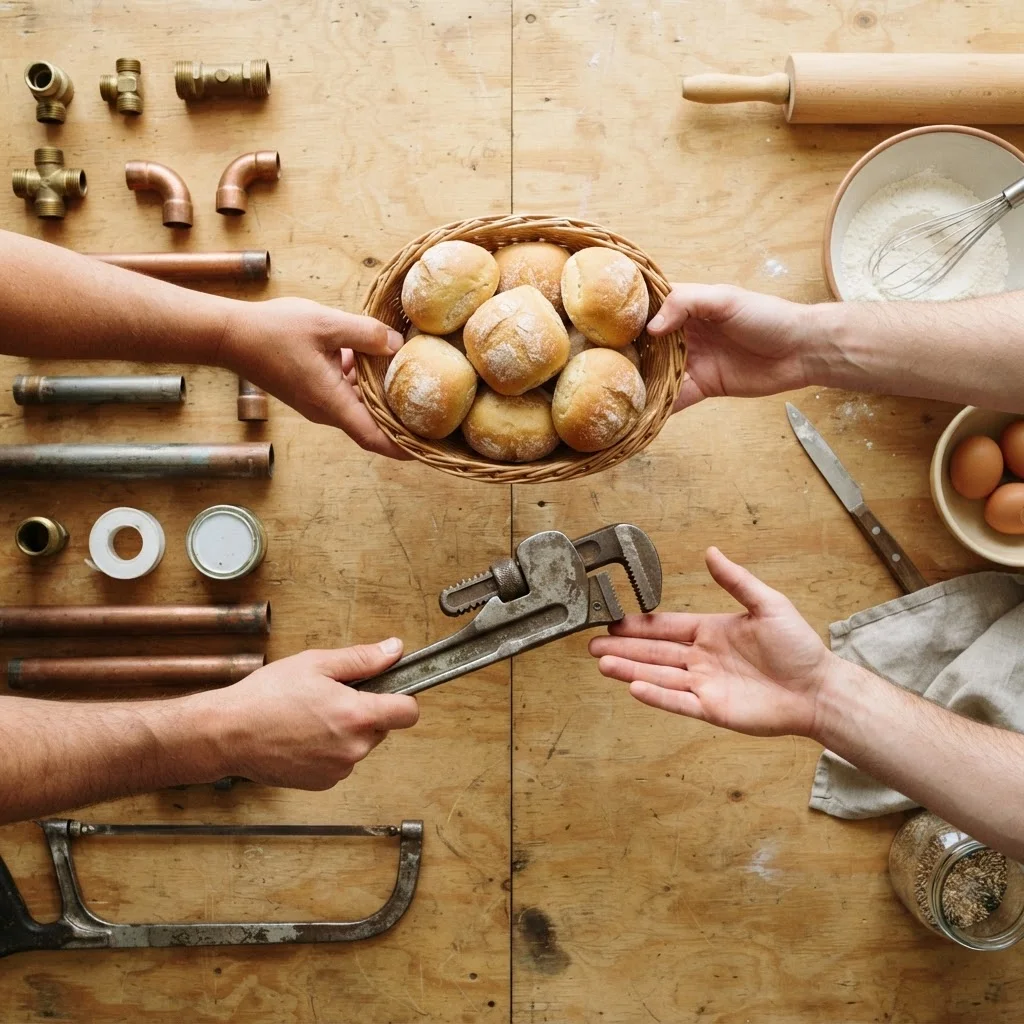
Table of Contents
You don’t need a fat wallet to get a leaky faucet fixed or a fence gate rehung. You need a skill someone else wants, and a little bit of nerve to offer it. Bartering for home repairs has quietly made a comeback as folks realize that hiring out every small job adds up fast, while the person down the street might happily trade you an afternoon of tiling for your knack with spreadsheets, sourdough, or car maintenance. Here’s how to actually make that trade happen without it turning awkward or unfair.
What Kinds of Repairs Are Barter-Friendly
Barter works best on jobs that are hands-on, don’t require a license, and won’t blow up in anyone’s face if something goes slightly wrong. Think of it as the difference between “I could learn this by watching a video twice” and “this requires a permit and insurance.” The first category is barter territory. The second isn’t.
- Carpentry and woodworking: Building shelves, patching drywall, replacing a rotted deck board, hanging doors.
- Painting and finishing: Interior rooms, fences, touch-ups, staining furniture.
- Plumbing basics: Unclogging drains, replacing a faucet cartridge, fixing a running toilet — the kind of stuff that doesn’t involve cutting into gas lines or rerouting pipe behind walls.
- Yard and exterior work: Gutter cleaning, fence repair, mowing, trimming trees, weatherproofing a shed.
- Furniture and appliance troubleshooting that’s mechanical, not electrical: Reupholstering a chair, fixing a wobbly table leg, servicing a bike or lawnmower engine.
- Seasonal prep: Caulking windows, insulating pipes, cleaning out a chimney flue (the sweeping part, not gas fireplace repair).
Steer clear of bartering anything that touches your home’s electrical panel, gas lines, or major structural elements. Not because trading is illegal — it’s not — but because those jobs carry real safety risk and often require a licensed professional to keep your insurance and home warranty intact. Save the barter economy for the jobs where a mistake means “try again next weekend,” not “call 911.”
Finding People Open to Trading Skills
The barter partner you need is rarely a stranger. It’s someone already circling in your orbit who just hasn’t been asked. Here’s where to look:
- Local skill swap groups:</strong ) Many towns have informal skill-swap meetups or online groups where people list what they can offer and what they need. Search for “skill swap” or “swap meet” plus your city or county name on social platforms and community bulletin apps.
- Tool libraries and repair cafes: These spaces attract people who already like fixing things and are often happy to talk shop — and trade favors — with fellow tinkerers. Volunteering a few hours at a repair cafe is also a sneaky-good way to meet people who might return the favor at your house later.
- Neighborhood apps and community boards: Posting something like “I’ll tutor your kid in algebra for two hours if someone can help me rehang a door” tends to get more traction than you’d expect. Be specific about the trade, not just “willing to barter.”
- Community centers, libraries, and faith groups: Bulletin boards there still work. So does asking the person leading a class or group activity if they know anyone handy who might want to trade.
- Time banks: If your area has a time bank, it’s basically built for this. You log hours helping others, and you can “spend” those hours getting help back, sometimes from someone who has zero interest in your specific skill but plenty in someone else’s. It widens the market considerably.
Word of mouth still might be your best tool. Ask around — “does anyone know someone who’s decent with drywall and might want to trade?” — before assuming you have to advertise to strangers.
Structuring a Fair Trade Agreement
The barter economy runs on trust, but trust goes further with a little bit of structure. You don’t need a notarized contract, but you do need clarity, because vague expectations are where barter deals go sideways.
Estimate the time, not just the task
“I’ll fix your fence” sounds simple until you realize your idea of fixing it is patching one board, and their idea is rebuilding the whole thing. Before you agree to anything, walk through the job together, estimate roughly how many hours it’ll take, and match that against the hours your own skill would take to deliver something comparable. A two-hour paint touch-up isn’t a fair trade for a full-day plumbing job — unless you’re offering two hours of something they value at a premium.
Write it down, even informally
A text message thread works fine. Something like: “So to confirm — you’re patching and painting the hallway drywall, roughly 4 hours, and I’m doing your dog’s obedience training for 2 sessions. Sound right?” This isn’t about legal enforcement. It’s about making sure you both remember the deal the same way next week.
Agree on materials upfront
Skills are one thing; supplies are another. Decide who’s buying the paint, the lumber, the replacement part. A common approach is: the person doing the repair provides labor, the homeowner covers materials, unless you’ve explicitly agreed otherwise. Sort this out before anyone opens a can of primer.
Set a rough timeline
Barter deals can drift because there’s no invoice creating urgency. Pick a loose deadline — “let’s aim for this over the next two weekends” — so the project doesn’t quietly die in the “we’ll get to it” pile.
Decide what happens if it’s bigger than expected
Sometimes you open a wall and find out the job is triple the size you thought. Agree in advance that either party can pause and renegotiate if the scope changes significantly, rather than one person feeling stuck finishing a job that’s ballooned past what they signed up for.
Avoiding Common Barter Misunderstandings
Most barter friction isn’t about bad faith — it’s about mismatched assumptions. Here’s what tends to trip people up, and how to sidestep it.
- “Fair” means different things to different people. Someone might think their specialized skill (say, tax prep or graphic design) is worth more per hour than yard work, purely because that’s the going market rate elsewhere. Talk about this openly rather than assuming your hour equals their hour. Sometimes the fair trade is uneven hours, not equal ones.
- Quality expectations aren’t always spoken aloud. If you expect a professional-level paint job and your barter partner is a weekend hobbyist, say so before they start, not after you’re staring at visible brush strokes. Look at examples of their previous work if you can.
- “I’ll get to it eventually” isn’t a plan. Barter arrangements without any timeline are the ones most likely to quietly fall apart. A loose date beats no date.
- Skipping the walkthrough. Always look at the job together before agreeing to terms. Descriptions over text (“just a small leak”) often undersell the actual scope.
- Forgetting to talk about who’s on the hook for mistakes. If a repair goes wrong — a shelf falls, a stain doesn’t take — decide in advance whether that’s a “we redo it together” situation or a “no hard feelings, but no re-do” one. This matters more on bigger jobs.
- Treating the first trade as a one-and-done. Good barter relationships tend to become recurring ones. If a trade goes well, say so, and ask if they’d be open to trading again down the line. That’s how you build your own informal network of go-to people instead of starting from scratch every time something breaks.
Bartering isn’t about squeezing out professionals or cutting corners — it’s about recognizing that most neighborhoods are sitting on a surplus of useful skills that never get traded because nobody asked. Ask. Structure it simply. Show up when you said you would. That’s really the whole system, and it works far more often than people expect.