How to Ask Your Neighborhood Mutual Aid Group for Help Without Feeling Awkward
Practical wording and etiquette tips for making a request that's easy for neighbors to say yes to.
5 min readBy Dave Kowalski

Table of Contents
There’s a specific kind of stomach-flip that happens right before you hit “post” on a request for help. You type it, delete it, retype it softer, add three exclamation points to seem less needy, then delete those too. If this sounds familiar, you’re not bad at asking for things — you’re just human, living in a culture that treats self-sufficiency like a personality trait instead of a circumstance.
Why asking for help feels harder than it should
Most of us were raised on some version of “don’t be a burden.” That message is well-meaning, but it doesn’t map onto how mutual aid actually works. Mutual aid groups exist specifically because needs are normal, temporary, and shared — the whole model assumes that today’s helper is tomorrow’s help-needer, and vice versa. Nobody keeps score in the way we secretly fear they do.
The awkwardness usually comes from three places: worrying you’re asking for “too much,” worrying you’re asking the “wrong way,” and worrying strangers will judge the reason behind your request. Here’s the reframe that helps most people: a clear, specific ask is a gift to the person reading it, not an imposition. Vague, apologetic requests are actually harder to help with, because nobody knows what to do with them. Specificity is kindness.
It also helps to remember that mutual aid groups are built by people who opted in. They joined a list, a group chat, or a neighborhood page because they wanted to be useful in small, concrete ways. You asking for something isn’t interrupting their day — it’s the reason the group exists.
Wording your request clearly and specifically
A good mutual aid request reads less like a confession and more like a classified ad. You’re giving people just enough information to know if they’re a match, and nothing that makes them feel obligated out of guilt.
A useful structure to borrow:
- What you need — stated plainly, not buried in backstory.
- By when — even a rough window helps people self-select.
- Any constraints — size, timing, transportation, allergies, whatever matters.
- How to respond — comment, message, or a specific time you’ll be free.
For example: “Looking for a car seat for a toddler (around 25 lbs) for about two weeks while ours gets repaired. Can pick up anywhere in the north side, evenings or weekends. Comment or message me — happy to swap something or return the favor.” That’s it. No apology, no explanation of the whole saga that led here. The backstory is optional and entirely up to you; the group doesn’t need it to help.
A few small wording choices make requests easier to say yes to:
- Use “borrow” or “hoping to find” instead of “desperately need” — urgency framed calmly reads as more credible, not less serious.
- Offer a range, not a single rigid ask (“a folding table, any size” beats “a 6-foot folding table, must be white”).
- Mention if you’re flexible on timing or pickup — flexibility is often the deciding factor for a helper’s yes.
- Skip the justification spiral. You don’t owe strangers your financial history to ask for a ladder.
If your ask is for a skill rather than an object — say, someone to look at a wobbly table leg or help you understand a lease clause — the same clarity applies. Name the task, the time commitment, and what “done” looks like. “Need 20 minutes of help figuring out why my bike gears are slipping, any evening this week” is easy to answer. “Does anyone know about bikes?” is not.
Where and how to post it
Every mutual aid network has its own rhythm, and reading that rhythm before you post will save you some awkwardness. Lurk for a few days if you’re new. Notice whether people post requests as their own thread or reply to a pinned “needs and offers” post. Notice whether people say thank-yous publicly or move to direct messages once a match is made. Match the local custom rather than reinventing it.
Some practical channel notes:
- Group chats and forums tend to move fast — post during active hours (check when the group is usually chatty) and use a clear subject line or leading phrase like “REQUEST:” if that’s the group’s convention.
- Neighborhood apps or bulletin boards are better for things that aren’t time-sensitive, since they get checked less frequently.
- In-person channels — a note on a community board, a mention at a regular meetup — work well for people who aren’t very online, and mutual aid groups often have both digital and physical touchpoints for exactly this reason.
Post once, not five times. If nothing happens in a day or two, a single polite bump (“still looking for this if anyone has one!”) is fine. Repeated posting can read as pressure, even if that’s not your intent.
If your local group has guidelines about who requests are for (some prioritize certain needs, some ask you to indicate urgency level), follow them — they exist so the group can function without burning out its most generous members.
Following up and paying it forward later
The follow-up is where a lot of the awkwardness quietly resolves itself, because it’s the part where you get to be a normal, gracious person instead of a Request. A short thank-you, publicly or privately depending on group norms, closes the loop nicely: “Picked up the car seat, thank you so much — this saved us a headache.” That’s it. No essay required.
If someone lent you something physical, return it clean and on time, or a little early if you can manage it. If a deadline is going to slip, say so as soon as you know, rather than letting it go quiet. A quick heads-up preserves trust far better than a perfect on-time return that you never mention until you show up with the item.
The other half of closing the loop is becoming the person who says yes to someone else’s request when you’re able to. This isn’t a debt you’re required to repay to the specific person who helped you — mutual aid doesn’t work like a ledger between two people. It works like a current that keeps moving. You might never pay back the neighbor who lent you a wheelbarrow, but you might be the one who shows up with folding chairs for someone else’s move next month. That’s the whole system working as intended.
A few ways to keep the current flowing without much effort:
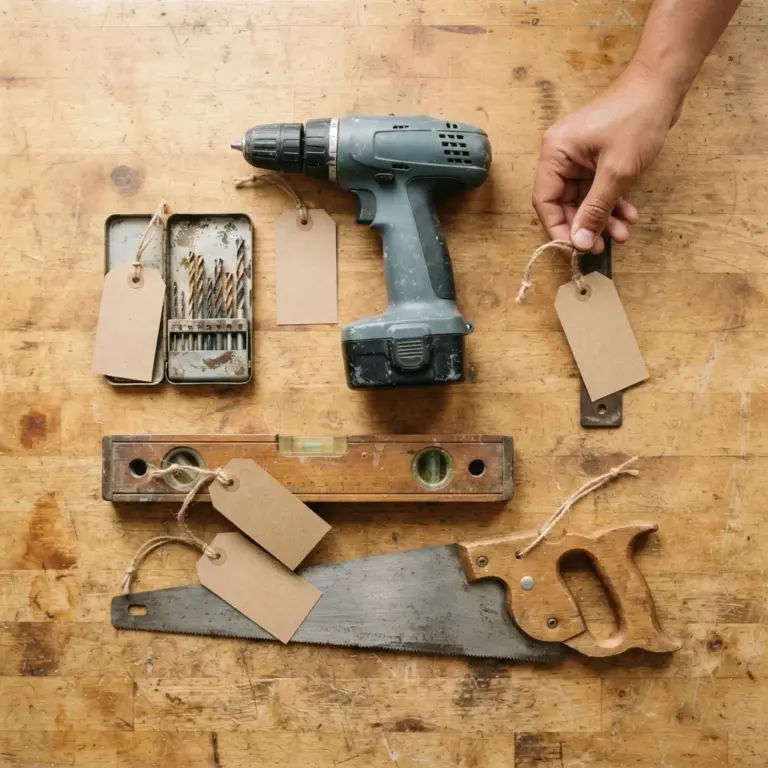
- Post an “offers” listing occasionally, even a small one — “have a ladder, drill, and extra garden soil if anyone needs them this month.”
- Respond fast to easy requests. If you can answer in thirty seconds (“yes I have that, message me”), do it — quick responses build a group’s reliability more than big gestures do.
- Normalize asking by modeling it well yourself. Every clear, no-drama request you post makes it easier for the next nervous first-timer to do the same.
Asking for help through a mutual aid network isn’t a last resort or an admission of failure — it’s a system built on the very ordinary fact that everyone needs a hand sometimes and everyone has something to offer sometimes too. The more matter-of-fact you are about it, the more matter-of-fact it becomes for everyone around you.