How Mutual Aid Groups Fill Gaps That Formal Programs Miss
A look at how informal neighbor networks solve short-term problems faster than formal channels.
6 min readBy Dave Kowalski
Table of Contents
What Counts as a Mutual Aid Group
Strip away the jargon and a mutual aid group is just neighbors deciding to look out for each other without waiting for permission, paperwork, or a nonprofit board to sign off. There’s no single organizational chart. Some groups are a loose text thread of fifteen people on the same block. Others have grown into online networks with a few hundred members, a shared spreadsheet, and a rotating list of volunteers who check in every week. What ties them together isn’t structure, it’s the underlying idea: help flows both ways, nobody has to prove they deserve it, and the person offering a hand today might be the one asking for one next month.
This is different from volunteering for a charity, where you show up, do a task, and go home. In a mutual aid group, the line between “helper” and “helped” is intentionally blurry. The retired electrician who drops off extra vegetables from his garden might be the same guy who needs a ride to pick up a car part next week. That fluidity is the whole point. It’s not charity flowing downhill from people with more to people with less; it’s a horizontal network where everyone is assumed to have something to offer.
You’ll find mutual aid groups organized around a neighborhood, a zip code, a apartment complex, a school community, or sometimes a shared identity or circumstance, like new parents or people with chronic illness who understand each other’s daily logistics. Many popped up or expanded during widescale disruptions, but plenty have simply stuck around because people found them useful in ordinary times too. A network built to handle an emergency is often just as good at handling a Tuesday.
Typical Requests These Groups Handle
The requests that flow through mutual aid networks tend to be small, specific, and time-sensitive; exactly the kind of thing that’s too minor to justify a formal application process but too real to just ignore. A few examples of what typically shows up in these groups:
- A ride somewhere on short notice. A car won’t start, a bus route got cut, or someone just needs to get to a medical appointment tomorrow morning.
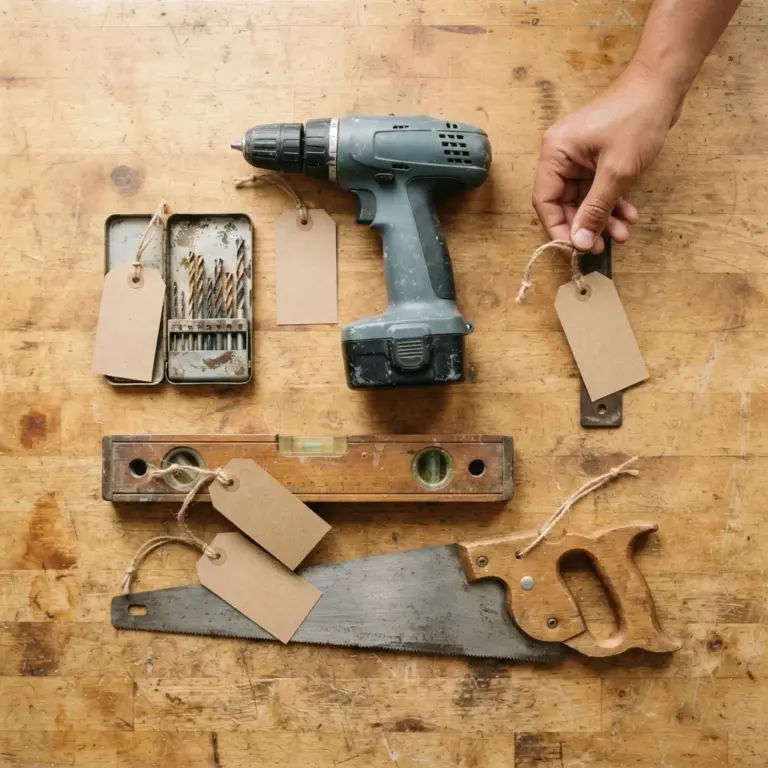
- Borrowing something for a day or two. A ladder, a truck for a furniture run, a car seat for a visiting grandchild, folding chairs for a backyard gathering.
- Extra food that’s about to go to waste. A garden that produced too many zucchini, a bulk grocery buy that didn’t get used before a trip, leftovers from a catered event.
- A hand with a physical task. Moving a couch up a flight of stairs, raking leaves for someone with a bad back, shoveling snow for an elderly neighbor.
- Childcare or pet-sitting in a pinch. A shift got extended, a sitter canceled, a flight got delayed.
- Someone to just be present. Sitting with a person recovering from surgery, checking in on someone who lives alone, walking a neighbor to an appointment they’re nervous about.
- Small, immediate financial gaps. Not rent or long-term expenses, but the twenty dollars that’s the difference between a full tank of gas and an empty one on the day someone has a job interview across town.
Notice the pattern: these are almost all short-term, concrete, and resolved within days, not months. That’s the sweet spot for informal networks. They’re not built to solve someone’s entire financial situation or replace an income. They’re built to catch the small stuff that, left unaddressed, tends to snowball into bigger problems. A missed ride to work can cost someone their job. A few days without food can derail an entire week. Mutual aid groups exist in that narrow, urgent window where a little bit of help, fast, prevents a lot of damage later.
How They Differ From Charities and Agencies
It’s worth being precise about this, because the differences aren’t just about speed, they’re about the whole shape of the relationship.
Formal assistance programs, whether run by a nonprofit or a government office, generally need to verify eligibility, document the need, and apply the same rules to everyone in order to be fair and accountable with the resources they distribute. That’s not a flaw, it’s a necessary feature of managing large pools of money or services responsibly. But it takes time, and it often requires the person asking for help to prove something: income level, residency, a specific hardship. For someone who needs a ride to a job interview in six hours, that process is simply too slow to matter.
Mutual aid groups skip almost all of that. There’s usually no application, no proof of income, no waiting period. Someone posts a need, someone else responds, and the exchange happens directly between two people who probably live within a few miles of each other. The trust comes from proximity and community, not from documentation. This makes mutual aid remarkably fast, but it also means it isn’t designed to handle everything. It works because requests are usually small enough that a random neighbor can reasonably fulfill them without needing a formal vetting process.
There’s also a difference in posture. Charities are often structured around an organization deciding what a community needs and then providing it. Mutual aid tends to be organized by the people who live in the community responding directly to what other people in that same community say they need, with no intermediary shaping the request. The person asking sets the terms. The person offering decides for themselves whether they can help. Nobody has to explain or justify their situation to a staff member or a case manager.
None of this makes mutual aid better or worse than formal assistance; it makes it different, and suited for a different kind of problem. If you need something that involves complex legal rights, a large sum of money, or a long-term support structure, that’s a job for a formal agency or program with the systems built to handle it. If you need someone to lend you a hand truck for an afternoon or share a ride to the pharmacy, that’s exactly the kind of thing mutual aid handles better and faster than any application ever could.
Finding One Active in Your Area
The hardest part of using mutual aid is often just finding the network, since there’s no national directory and no single website that lists every group. A few reliable starting points:
- Search social media for your town or neighborhood plus “mutual aid.” Many groups run primarily through a public or private group page, and searching your city or specific neighborhood name alongside that phrase usually turns up something, even in smaller towns.
- Check community bulletin boards, both physical and digital. Local library branches, community centers, laundromats, and neighborhood-specific apps or forums often have flyers or posts about active groups.
- Ask at a local tool library or repair cafe if your area has one. These spaces tend to attract the same community-minded crowd, and organizers often know about other informal networks nearby, even if they’re not formally connected.
- Look for faith communities and community centers that host or sponsor networks. You don’t need to be a member of a congregation to plug into a mutual aid effort it hosts; many are open to the whole neighborhood.
- Start with one small, direct request to a neighbor. If you can’t find an organized group, sometimes the simplest move is putting a note in a shared building group chat or on a community app asking what you need. It’s how a lot of these networks got started in the first place.
Once you find a group, the best way to make sure it’s there when you need it is to show up for it when you don’t. Offer what you can, even if it’s small, before you ever need to ask for something yourself. Mutual aid works because enough people treat it as a two-way street rather than a one-time favor, and that’s a habit worth building into your week, not just your emergencies.